username public profile information
@zig
Found 227 profiles across 227 platforms.
- Active since
- Apr 13, 1998
- Last seen
- May 13, 2026
- Verified
- 5 platforms
- Reach
- 25.7K
- Snapshot
- May 14, 2026

<p>What’s up, I’m zig. I’m a software engineer living in new delhi. I am a fan of technology, innovation, and education. I’m also interested in programming and volunteering. You can read my blog with a click on the button above.</p>
+5 more fields
roles
interests

Bio not available for this author
Joined: May 14, 2009
+3 more fields
@zig
+2 more fields

Magaz Zig..un magazzino di oggetti d'arredo di modernariato particolari e originali..a Padova..tel. 348 8034829
Website: stores.ebay.it/MagazZig
Last active: Dec 16, 2024
+5 more fields


Joined: Feb 9, 2014
Last active: Nov 18, 2025
+6 more fields
social links

Joined: Apr 14, 2024
Last active: Jan 15, 2026
+12 more fields
Location: Ireland
Joined: Jul 24, 2005
Last active: Jul 24, 2005
+6 more fields
@Zig
Joined: May 8, 2022
+8 more fields
personal bests


@Zig
@Zig
Location: United States, US
Joined: Aug 15, 2021
+9 more fields
buyer score
seller score
@zig
+2 more fields

call me zig | always in motion 🛩 |📍dtx
+2 more fields
@Zig
Joined: Feb 15, 2023
+4 more fields

@zig
Joined: Sep 22, 2003
+13 more fields

@zig
Joined: Jun 10, 2015
+6 more fields
pseuds


BORA FALAAAAR
Joined: Sep 26, 2016
+4 more fields


## Welcome to my page! 👋 Check out my links below. Featured links: TikTok, Make your own page like this for free using Beacons, Join my community.
+2 more fields
social links
links

@zig
+2 more fields
Location: FR
Joined: Aug 21, 2022
+4 more fields
Joined: Aug 19, 2024
Last active: Aug 19, 2024
+5 more fields

Joined: Mar 30, 2022
Last active: Feb 8, 2025
+4 more fields

+3 more fields
@zig
Joined: Jan 1, 2012

+12 more fields
platforms


Last active: May 14, 2011
+2 more fields

@zig
Location: Lexington, Kentucky USA
Joined: May 18, 2002
+7 more fields

Joined: Jun 20, 2015
+10 more fields
Joined: Nov 21, 2008
Last active: Nov 29, 2008
+5 more fields

+3 more fields

Sou um eterno apaixonado pela fotografia
Joined: Mar 27, 2013
+7 more fields

Location: Changsha, China
Joined: Sep 27, 2012
Last active: Jul 18, 2014
+6 more fields

Joined: Nov 2, 2018
+4 more fields

Location: China
+15 more fields
social links
languages
submit stats

Not Available...
Joined: Feb 8, 2010
+9 more fields

Andrew Zigler is a GTM Engineer at LinearB and the host of Dev Interrupted, a twice-weekly podcast and newsletter where 40k+ builders decode the transition to AI-native development.
Location: West Hollywood, California, USA
Email: [email protected]
Website: andrewzigler.com
Joined: Mar 29, 2022
+4 more fields


@zig

Joined: Apr 1, 2012
+2 more fields
skills

Location: petrolina, BR
Joined: Aug 11, 2008
Last active: Aug 23, 2008
+3 more fields
ratings


Joined: Mar 26, 2019
Last active: Jun 20, 2019
+6 more fields


@Zig
Location: Australia
Joined: Jun 14, 2025
+8 more fields

+4 more fields
Joined: Jan 13, 2024
+3 more fields

Joined: Jan 23, 2011
Last active: Feb 14, 2017
+3 more fields
@Zig
Joined: Apr 24, 2013
Last active: Jan 8, 2018
+5 more fields
ratings
@zig
Joined: Jul 1, 2024
+5 more fields
@ZiG

@Zig
Joined: Sep 1, 2014
Last active: Sep 11, 2014
+1 more fields
Last active: Aug 13, 2013
+5 more fields

@zig
Joined: Nov 12, 2016
Last active: Mar 23, 2026
+1 more fields

Joined: Mar 13, 2019
+3 more fields
Joined: Feb 19, 2021
Last active: Feb 11, 2026
+2 more fields
@zig
Joined: Dec 2, 2021
Last active: May 14, 2022
+3 more fields

Joined: Jul 22, 2003
Last active: Nov 2, 2003
+16 more fields
membership roles

@zig

Dallas, Texas
Location: Dallas, Texas
Joined: Feb 11, 2013
+15 more fields


Location: Oscoda, MI, United States
Joined: Jul 18, 2008
+7 more fields
badges

@Zig
Joined: Jul 8, 2015
+3 more fields
groups

@Zig
Last active: May 14, 2019
+7 more fields

Location: Iasi, Romania
Joined: Aug 28, 2007
+3 more fields
skills
@zig
+15 more fields

Woodworking / wood turning enthusiast, data wrangler, poker player, husband and dad.
+2 more fields

Location: Martinez, US
Last active: May 27, 2016
+3 more fields


+4 more fields
+1 more fields
@zig
+2 more fields
score distributions

+1 more fields

@Zig
Joined: Sep 20, 2012
+8 more fields
courses
roles


Joined: Feb 24, 2023
+6 more fields
jobs
schools
photos
images-ssl.gotinder.com/63f8ebba083ea5010023b36f/original_0ebf916d-1b12-419d-9a03-5a88d7afc0dc.jpeg
images-ssl.gotinder.com/63f8ebba083ea5010023b36f/original_ab4a5ea1-fcc9-4b23-84fc-dc93d55904d3.jpeg
images-ssl.gotinder.com/63f8ebba083ea5010023b36f/original_1b814b11-e3b3-49fb-b868-7f8a3b195fe4.jpeg
images-ssl.gotinder.com/63f8ebba083ea5010023b36f/original_6381c10c-4071-4f2d-b582-19f6c695696f.jpeg
images-ssl.gotinder.com/63f8ebba083ea5010023b36f/original_867a2291-4719-4bc0-b081-697e8d49ce23.jpeg
images-ssl.gotinder.com/63f8ebba083ea5010023b36f/original_fc2bceab-aedd-4679-a2bf-19143bbef6f3.jpeg
Joined: Oct 22, 2014
+8 more fields
Joined: Apr 12, 2020
+3 more fields


Joined: Mar 28, 2014
Last active: Mar 28, 2014
+5 more fields

@zig
Location: br
Joined: Jan 27, 2023
+9 more fields

@zig
Joined: Dec 2, 2017

Maker, Woodworker, CNC Enthusiast, poker player, husband and dad.
Location: Texas, USA
Joined: Aug 31, 2008

Welcome to the Grand Slam Ventures, LLC scheduling page. Please follow the instructions to schedule your meeting in the calendar.
Location: en
+3 more fields

@ZiG
Joined: Mar 14, 2019
Last active: Mar 14, 2019
+10 more fields
groups
+4 more fields

Joined: Dec 13, 2023
Last active: Dec 28, 2025
+1 more fields

@zig
+1 more fields


gamer man
Joined: Apr 25, 2012
Last active: Jul 25, 2019
+4 more fields

Location: United States
+2 more fields

@zig
Joined: Oct 15, 2014
Last active: Oct 15, 2014
+4 more fields


Location: en
Joined: Oct 2, 2018
Last active: Apr 24, 2022
+7 more fields

@zig
+3 more fields


@zig
Location: LV
Joined: May 21, 2020
+10 more fields

-
Joined: Oct 19, 2019
+9 more fields

Location: United States
Joined: Feb 15, 2004
Last active: May 13, 2026
+7 more fields

I am into all things FPGA, and MCU related. I am currently studying a Bachelor of Engineering (Honours) (Electrical and Electronic) .
+5 more fields
skills


Location: Australia
Joined: Sep 23, 2023
Last active: Jun 8, 2024
+16 more fields
@zig
Joined: Aug 23, 2005
Last active: Jul 10, 2014
+4 more fields

Joined: Aug 17, 2022
+8 more fields

Love high tech
Location: France
Joined: May 12, 2022
+1 more fields

+9 more fields

how do i steam
Location: Texas, United States
Joined: Aug 22, 2004
+4 more fields

Joined: Oct 21, 2024
Last active: Nov 14, 2024
+3 more fields

Joined: Jun 24, 2024
+4 more fields
Location: DE
+10 more fields
Travel and other stuff I come across. Main account is @joshj.ames
+1 more fields
@Zig
Joined: Aug 18, 2023
+11 more fields
groups

Joined: Oct 19, 2021
+4 more fields

Joined: Apr 12, 2024
Last active: Apr 15, 2024
+12 more fields
clips
@Zig
Joined: Jun 16, 2023
Last active: Jun 17, 2023
+5 more fields

@zig.bsky.social
Joined: May 19, 2023
+1 more fields
former usernames
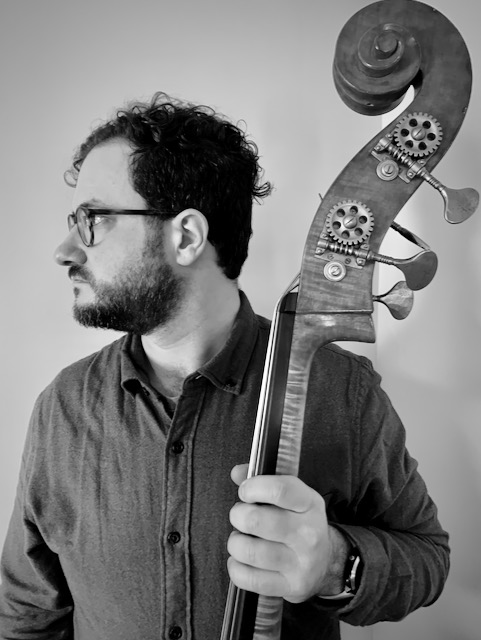
Bassist | Writer | Photographer
Joined: Oct 24, 2022
Last active: Oct 24, 2022
+6 more fields
social handles
links

@zig
Joined: Sep 1, 2009
+1 more fields
badges


Welcome https://imgur-archive.ppy.sh/qvHdlc4.pnghttps://imgur-archive.ppy.sh/AxwvC1I.png 1st 1* FC - 6 June 2016 1st 2* FC - 29 June 2016 1st 3* FC - 7 April 2017 1st 4* FC - 27 May 2017 Started actively playing around - August 2017 1st 100pp - 22 October 2017 Became 5 digit - 3 November 2017 1st 5* FC - 11 November 2017 Got 3000 total pp - 5 January 2018 Passed 7* map - 20 January 2018 1st 200pp - 1 March 2018 Got 4000 total pp - 12 April 2018 1st 6* FC - 21 April 2018 Got 5000 total pp - 14 August 2018 1st 300pp - 23 August 2018 https://imgur-archive.ppy.sh/bG7p6T7.png https://s01.flagcounter.com/countxl/qdP2/bg_FFFFFF/txt_000000/border_000000/columns_3/maxflags_12/viewers_0/labels_0/pageviews_0/flags_0/percent_0/ https://imgur-archive.ppy.sh/vVSOmdf.pnghttps://imgur-archive.ppy.sh/bYR86EE.pnghttps://imgur-archive.ppy.sh/atYb0Il.pnghttps://imgur-archive.ppy.sh/NW1r3XE.png https://imgur-archive.ppy.sh/Yd9ZUPb.pnghttps://imgur-archive.ppy.sh/W1EayBx.png https://imgur-archive.ppy.sh/oD4idkI.pnghttps://imgur-archive.ppy.sh/7RWfGJR.pnghttps://www.osustuff.org/img/imageslice/2018-09-01/70094/425589.pnghttps://www.osustuff.org/img/imageslice/2018-09-01/70094/425590.pnghttps://www.osustuff.org/img/imageslice/2018-09-01/70094/425591.png https://www.osustuff.org/img/imageslice/2018-09-01/70094/425592.pnghttps://www.osustuff.org/img/imageslice/2018-09-01/70094/425593.pnghttps://www.osustuff.org/img/imageslice/2018-09-01/70094/425594.png https://www.osustuff.org/img/imageslice/2018-09-01/70094/425595.pnghttps://www.osustuff.org/img/imageslice/2018-09-01/70094/425596.pnghttps://www.osustuff.org/img/imageslice/2018-09-01/70094/425597.png Headset: Razer Kraken Pro Tablet: GAOMON 56K Keyboard: Razer Blackwidow 2014 Ultimate Thanks for the 1 month supporter Shigere (Dan) Thanks for the 1 month supporter Euphonym (Marko)
Location: Latvia, Riga, LV
Joined: Jun 12, 2015
Last active: Mar 15, 2026
+20 more fields
previous usernames

@zig
Joined: Sep 1, 2009
+1 more fields
badges


Joined: Apr 2, 2014
Last active: Apr 6, 2014
+5 more fields
@zig
Joined: Sep 1, 2009
+1 more fields
badges

@zig
Joined: Jul 30, 2019
+10 more fields

Location: US
Joined: Jul 26, 2014
+7 more fields

@zig
Joined: Apr 13, 2020
Last active: Dec 17, 2020
+6 more fields

Location: Japan
+9 more fields
trophies
recent games

French Brittany-based graphic #designer #screenprint Dezzig Studio / Zig illustrator & publishing editor.

My Funny Collection
Joined: Oct 12, 2011
+5 more fields

Location: Arealva
Joined: Jul 15, 2012
+3 more fields

@ZIG
Location: EG
Joined: Sep 25, 2024
+5 more fields
user ranking
@zig
Location: California, United States
+10 more fields
satisfaction
interested in

@Zig
+4 more fields
@zig
Joined: Feb 8, 2008
Last active: Apr 15, 2008
+6 more fields
Joined: Aug 9, 2015
+4 more fields

Joined: Aug 1, 2017
+7 more fields


Joined: May 21, 2024
+4 more fields
@zig
Joined: Sep 26, 2009
+5 more fields
Joined: May 7, 2018


Possibly Way More than You Ever Wanted to Know ABOUT ME Siegfried (Zig) Engelmann 2005 My Routine I guess an objective description of me might be, "A boring kind of workaholic guy." Naturally, I don't see myself that way, but my daily routine suggests that my view would not stack up well against a consensus, even though the things I work on are interesting (at least to me). Every working day is pretty much the same. I get up around 5:00 and do my exercises. Then the daily ablutions. I arrive at work around 6:00. (It takes about 5 minutes to get to the building we call "The Corp," which is short for Engelmann-Becker Corporation.) I work until about 12:00, then do some more exercises, and eat my Subway chicken salad. (I've been doing this long enough to accumulate a shelf full of Subway plastic forks and knives.) I work some more until about 3:00. Then I take a nap. At 4:00, it's non-work time. A couple guys who work with me come to my office and we solve at least some of the more important world problems, tell foul jokes and lies, and have a couple of beers. I get home around 5:00 and cook dinner. (I do all the cooking because I live alone.) I'm pretty strict about what I eat because I don't want my weight to get above 202. I have a bum leg, a by-product of spinal surgery that I had in 2004. I don't want to carry any more weight than I have to and 202 is about as high as I want to go. (This is about 25 lbs. less than what I weighed before the surgery.) So I eat no sweets, except on the weekends. I go light on fat and empty carbs and light on the volume. Early in the evenings, I usually paint. I do watercolors, not oils, because I'm a slob and I would be lax about doing things like cleaning my brushes. With watercolors, it's not a problem. I got into painting in 1993. Before then, I always wrote things in the evening. I'd start at 7:30 and write until 10:00. After I'd written the book, War Against the Schools' Academic Child Abuse, I didn't feel like writing in the evenings. The book was largely negative. It told about things that needed to be told, but like nearly all of the other stuff we do, nobody pays much attention to it. So it's one thing to do constructive work that may be "challenging," yea sometimes punishing, like designing programs, but it's another to write about crap that pisses you off so much you have trouble sleeping. So I paint. That's constructive—creating pretty images and doing something that is actually quite challenging. Watercolor painting is tricky because you can't indiscriminately paint one color over another. You don't paint things white, you simply use white paper and don't paint where you want it white. I like the challenge of creating something that is technically difficult. I rarely paint humans, although I can do it. I love scenes, dramatic ones with crisp shadows and compelling vistas. [Pic o' the month.] Later in the evening, my partner, Lou Bradley, comes over and we watch TV, chat about different things, and enjoy each other's company. Lou is a seamstress with a seriously retarded son, Devin, who is now in his 30s. Lou's life is not all that easy, so generally when she comes over, we try to keep things on the light side. Lou leaves around 10:45, and I usually go to bed a little after 11:00. I don't sleep well. Usually I'll get 3-4 hours of real sleep during the night. About eight years ago, I decided to do something about it so I called the local sleep clinic and explained my problem. The respondent said, "Oh you're describing insomnia." "Yeah?" "Insomnia is not a sleep problem. It's a psychological problem." "Hey, I'll give you a psychological problem." They must have learned educational logic. If you can't teach something, blame the kids. For medicine, if you don't know how to solve the problem, blame the patient. My schedule on weekends is different than my workweek schedule. I still do my exercises, but I don't get to work before 7:30, and I don't work past noon. The usual routine for the afternoon is that Lou and I go out in the country. If Devin is not involved in an organized activity, he joins us. Once in a while, one of my sons who live in town, Owen or Kurt, will join us. Sometimes their families will also join us. They have kids, so we usually end up eating peanuts in the shell and having peanut-shell fights. The land we go to is owned by a partnership in which I have a minor interest. I love getting out there. If I couldn't spend time on the weekends out in the country, I'd be very depressed. Working with schools is a frustrating business, not so much because the tasks are impossible, but the bureaucracy often is. It stands as a supreme barrier between you and the teachers and kids who need your help. In fact, a good definition of school administrations for at-risk schools would be: governing organizations that insulate both teachers and students in need from learning much. (Another good one is, if the kids have ADD, the teaching is probably SUB. Maybe the best one comes from Voltaire, who really anticipated the current status of education when he wrote, "If we believe in absurdities, we commit atrocities.") Anyhow, you probably get an idea of how I feel. It's not the individual people, but a stupid system. The good news is that I can leave all those frustrations and profound stupidity behind when we're out in the county. In the winter, Lou and I plant seedling trees, go for walks, and take pictures. One of the properties is near Veneta, Oregon. It's hilly land that overlooks this awesome valley—Crow Valley—dotted with some farm buildings, and framed by the coastal range, which is a patchwork of dark areas of huge Douglas Firs and lighter areas of young trees. Back to Top. Trees I first started planting this land (120 acres) back in the early '70s. Sometimes I would work with my young sons. Most of the trees we planted back then are now over 80 feet tall. The land has paths and roads that go all over the place. A gravel road goes uphill and terminates at the top of an awesome knoll. At one time, you could stand on top of the knoll and view 360 degrees of dynamic landscapes—Fern Ridge Reservoir to the northeast, huge hills to the northwest, Crow Valley to the west and south and, on a clear day, the three snow-clad Sisters to the east. Now, most of the view is eclipsed by the trees we planted. The property has over 200 varieties of trees, some of which are quite exotic. We planted most of the trees on the knoll, including several hundred Atlantic cedar (a true cedar, versus the kind native to North America). Now you can't buy seedlings to plant. You can buy balled and burlapped juveniles, but not seedlings. Today, it would have cost thousands to decorate the knoll with these natives of the Atlas Mountains in Africa. We also planted lots of Coulter Pines, which are rare natives of the San Bernardino Mountains. They have the heaviest and most massive cones of any conifer. I raised those trees from seeds. We have nearly every conifer from North America that would survive in Oregon's climate, and most exotic conifers from the rest of the world, including the only pine that grows in South America, the monkey puzzle. One of my favorites is the coast redwood. They're remarkable. They can survive for hundreds of years in a heavily shaded forest, even though they may be only 20 feet tall. If the forest is cut down, they revert to the form of a juvenile tree and start growing at the rate of 2-4 feet a year. I even grew some cuttings from side branches of mature redwoods. They said it couldn't be done. I put isobuteric acid on the cuttings, kept the cuttings in sand, which was covered with an inch of water, for 2 years. They didn't rot, and they finally grew roots. About the only characteristic they retained from the "mother" tree was that they produced cones when they were only about ten feet tall, compared to the natural tree, which takes about 40 years. I thought they might have some commercial interest, particularly since redwoods are now being planted in a lot of places beyond their natural range. You may have gathered that I love trees. I think they are beautiful, and I like the idea that they tend to improve with age. And I love working with them. But I never used any power tools. If a tree needed to be cut down, I used a bow saw or an ax. If it needed its lower branches cut (so you can walk through a grove), I used an ax. I put these activities in the past tense because I haven't done them since my leg went south. But we still plant trees. We have another place with 60 acres. This one is only about 8 miles south of Eugene. It's very hilly and reminds me a lot of the place at Veneta in the '70s. It was clear-cut in the '90s, and we bought it a couple of years later. It has a ridge that runs east and west and that is higher than the knoll at Veneta. It has commanding views. Lou and I have planted thousands of trees there. The routine that we have for planting trees is that I dig the holes using a maddox, a tool that looks like a pick ax; but across from the pick is a blade something like a hoe. First you use that blade to scalp off all the grass, its roots and vegetation for a patch about 2 feet square. Then you swing the thing like an ax and make a hole about 10 inches deep for the tree. After I dig the hole, Lou puts the seedling in it and tamps the dirt. The only difference in the routine we have now and the one we used to have is the rate. It takes me forever to negotiate around on unlevel or uneven ground, and the terrain is both. As a result, we may plant about 20 trees in an afternoon. Three years ago, during the same amount of time, we would plant at least 100. One afternoon (about 3 hours) we planted 200. In the summer we check on the trees. We don't water them, so they're on their own. The summers here are dry. If seedlings make it through the first year, they'll probably survive. Lately, the summers have been unusually dry. The result for a variety like a western red cedar or a white pine is that possibly only 40 percent of the seedlings survive, compared to about 90 percent during a normal summer. Once exotic trees get established, they'll grow at a pretty good rate, but nothing around here can match the rate of the Douglas fir. (The coast redwood comes close, and so does the Sitka spruce, but it's capricious-growing well for about 5 years, and then growing little for the next 5.) Back to Top. Motorcycles Another part of my current routine that has changed is what I drive. Since the '70s I had driven motorcycles whenever the weather was decent. They were something of a passion. In fact, 9 of them sit in my garage now (which means there is no room for cars). Another cycle sits in my son Owen's garage. Before my surgery, I rode them to work during most of the year, and sometimes on the weekend Lou and I would take a ride out to one of the reservoirs around Eugene and have us a little picnic. We've also taken some tours—to Eastern Oregon, Crater Lake, the California coast. I have some awesome bikes and all are in primo condition. One is a limited edition Kawasaki cruiser. (They built only a few hundred of them.) Another is an awesome muscle machine, a 1986 Honda Magna with the big engine. It will get from 0 to 100 in about 11 seconds, and 1986 was the last year Honda made this model with the big engine. I can't ride motorcycles now, but Lou and I still go places once in a while—like a weekend at the Oregon coast. My favorite place is Bandon, and I must have painted more than 30 paintings of Bandon scenes. The coast consists of sandy beaches with agates, and huge rock formations of wildly different shapes, from smooth molded forms to armies of spires and spikes. On a sunny October day, there's nothing more awesome than the coast at Bandon. The water is really blue, the shadows are carved in dark colors, the air is warm and fragrant. The photo of me on the website was taken at Bandon on one of those incredible days. Back to Top. The Maya Over the years, I have had periodic passions in addition to motorcycles. For a while I was really into the Maya. I studied their calendar, their art and artifacts. I even wrote some unpublished papers about some of their calendric wonders. Much of what I wrote involves the Maya codices—illustrated books, almost like comic books, that were used by the priests. Traditional interpretations of them are that the scribes who created copies of the codices sometimes made mistakes. I don't believe there are any "mistakes" but, rather, tricks, puns and secrets that the priests used to make predictions about celestial objects. For instance, there are hideous calendric mistakes on page 24 of the Dresden Codex, which tells a great deal about the cycle of the planet Venus. The whole game with Venus was to predict when it would reappear as the morning star. Computing completed cycles of Venus is difficult because it has a wobble in its orbit, so its behavior is different from one year to the next. Its orbit averages out to roughly 584 days for it to complete a cycle of first appearing as the morning star. The table on page 24 has rows of numbers that are multiples of 584. The base number of the table, and the first number, is 2920, which is 5 times 584 and 8 times 365. So it coordinates completed revolutions of Venus with the yearly calendar. The big problem with the number 2920 is that it is not a multiple of 260, which is the number of days in the Maya ceremonial calendar; so the table has a row of corrections that relate the orbit to the ceremonial calendar and that also address the problem that the number 584 is not perfectly accurate. Everything had to be very tidy with the Maya. Investigators had discovered that the correction row may use a more precise value for the orbit of Venus, 583.92. What I discovered about this table was the possibility that they used an even more precise number, 583.923. Here's where there may be some evidence for that conclusion: if you multiply two prominent tables numbers that have apparent mistakes, you get a humongous number that precisely describes completed revolutions of Venus (as measured by 583.923) and that is also a completed revolution of the 260-day ceremonial calendar, the 365-day calendar, the 364-day calendar (which is one of the cycles the Maya used), the 584-day calendar, and possibly others. The numbers you multiply are the first number of the correction row, 9100, which appears to be off by 260 days, and 2920, the first number in the table, which has the wrong date. The number you get when you multiply is 26,572,000, which is 72,800 years. You divide by 583.923 for the cycle of Venus and it comes out almost exactly 45506 completed revolutions of Venus (off by 9 hours). Is this a coincidence? It could be, but there are some interesting possibilities that suggest it isn't. One has to do with solar eclipses. One of the tables in the Dresden Codex has the four numbers that exactly describe the succession of days for solar eclipses to occur. There's one problem with the idea that the Maya knew these numbers and their sequence. The numbers predict eclipses anywhere in the world. So how could the Maya calculate these numbers unless they had communication with people from other parts of the world? Duh. They couldn't. Yet, investigators knew about these numbers for over 60 years, but nobody drew the obvious conclusion. Recently, investigators have started to figure out that the Maya had commerce with folks from other places on the globe. Duh. I believe that all the codices are star charts, with magic created by placing the codex in a particular orientation, placing a stick so specific parts of the picture are lined up (like the eyes of two or three characters). The stick will point to an exact place in the ceremonial center where planets or alignments of celestial objects are predicted. (Tonight, we stand here and the god of the sun will touch the notch in the facade of the temple of warriors.) Although the illustrated characters look like something out of a comic strip, the art is absolutely precise in detail. The characters are almost always shown in profile. Why? I believe that it is to create alignments involving two or more parts of the illustrated gods. Their eyes may be one key for creating these alignments. The eye of the gods is a snail, and in one page of the Dresden Codex the god Chac has a snail on his leg, and it is perfectly aligned with two other eyes in the picture. All body parts may be involved in alignments. I don't have a clue about how they work, but I am quite sure there are no accidents involving a scribe randomly drawing the god in a physically impossible position. I believe they are in contorted positions to create possible alignments of feet-eyes-hands and possibly specific ornaments they wear on their belts. It's also apparent that the Maya knew how to draw figures that are anatomically correct. They appear occasionally in the Madrid Codex and in the Dresden Codex. Also, the ceremonial center at Palenque has representations of human figures that are anatomically correct. One possibly interesting link is that both Maya art and that of ancient Egypt and Sumer show figures in profile. If the reason for the Maya is to create alignments, and if the Maya have temples that look as if they are influenced by Egypt, it just might be that there is still another Rosetta stone to be discovered in Egypt, the function of the profiled figures as predictors of celestial events. I wrote up some of the stuff on the numbers and alignments, and sent it to an archeological journal. They didn't have anybody that felt qualified to comment on the number stuff. One guy who was qualified was out of the country and didn't return for a year, but we never connected, and I lost interest in the Maya. Back to Top. Work So much for this peripheral stuff about me. The center of me is my work. My goal for years has been to do things that are productive and that help make life better for kids, particularly at-risk kids. I don't consider myself a kinderphile like Rousseau, sobbing over the beauty of kids playing. For me it's more an ethical obligation. Certainly kids are enchanting, but they also have a future, and their future will be a lot brighter if they have choices. We can empower them with the capacity to choose between being an engineer, a musician, an accountant, or a vagrant through instruction. We can accelerate what they learn and change their capacity to learn. But the only avenue for installing these choices is through hard-minded education. We can't lead with our chin or our hearts. It must be a cerebral battle, governed by data and the understanding that if we try hard enough, we can design effective practices that will accelerate the performance of at-risk kids. And if we don't try hard enough, the hell with us. This cerebral game is not popular. In fact, it is actively eschewed even by a lot of investigators who would like to believe that they are objective or smart. Their blasé attitude is most obvious in their active ignoring of Direct Instruction, even though it has more data of effectiveness than all other approaches combined. Furthermore, the bases for how it works have been spelled out. Years ago, Doug Carnine and I wrote the only real theory of instruction that exists. It is rigorous. It is precise. And it articulates the basic functions of what instruction has to achieve and the variables that have to be controlled to achieve "faultless" instruction. This book, Theory of Instruction: Principles and Applications, is potentially useful to show the level of detail that has to be addressed to create highly effective instruction; however, it has never been recognized by the field, even that part of the field that deals with "theories of instruction." In Follow-Through, we showed that at-risk kids could be instructed in a way far superior to the way they are being instructed right now in 99 percent of the schools for at-risk kids. Not only has the field failed to recognize our achievement; the field even fails to recognize that Follow-Through existed. Outfits like the NAACP and other groups that were supposed to be advocates of blacks sent them down the river by the boatload, or more accurately the busload. Consider the inanity of bussing. The Coleman Report showed that inner-city blacks were far, far behind in performance. So what did the mainline thinkers do to solve this problem? They transported black fourth graders who read on the second-grade level and put them in schools where fourth graders read on the fourth-grade level. The policymakers had so contorted and confused history with the current problems facing fourth graders from the inner-city that they actually believed that these kids could somehow pick up 2 years' worth of reading skill instantly if they were simply placed in a school that had higher expectations for them and gave them an "equal educational opportunity." These policymakers were so dumb they apparently didn't ask themselves if they could take a second-grade white kid, put him in the fourth grade, and expect him to perform at the fourth-grade level. Talk about duh. Even today, the NAACP hasn't caught on to what it takes to be an advocate. They have to fight the school districts and insist that the schools respond to the unique needs of at-risk kids. The NAACP should be screaming for affirmative action in the form of different, better, more sophisticated instruction first. I don't believe that serious change will occur in education until parent groups and outfits like the NAACP start dumping all over school districts and demanding training and programs that work. Another book that I think is important but that is being ignored about as much as Theory of Instruction is a theory of performance and learning that I wrote with Don Steely. The book is Inferred Functions of Performance and Learning. It is absolutely primo. Again, however, it is out of step with the field and the current idiom of "empirical science." I see myself primarily as a program designer. What that means is that I operate from a set of rules that would permit me to take any instructional problem and create a sequence that would be effective for teaching it. It wouldn't be perfect because you can only do so much following rules for constructing something that is supposed to be effective and efficient. The final polish for the program comes from empirical information, a field tryout; however, the construction rules that you use to create a program permit you to make predictions that the program will be successful, but not finished. The field test reveals mistakes and places where the program is either lumpy or flat bad. You can use the basic construction rules to fix up the weak program. As soon as you see the specific difficulties the teacher had or the wrong responses the tryout students made, you'll almost always realize how those problems are unintentionally created by a weak analysis. In other words, if you know the exact problem, you can use your construction rules to fix it up. Goeff Colvin and I are currently working on a "rubric" that would permit somebody to look at material and judge whether it is true DI or some degree of impostor. Unfortunately, the rubric is out of hand right now. The reason is that if it's DI, a whole lot of details go into its construction. Some details address tasks, their wording, the response format for the students, and other details on the task level. Then there is the exercise and how it is configured. Are the examples sequenced sensibly? Are there a sufficient number of examples? Are any misrules or unwanted stipulations consistent with the set of examples? Do the examples cover a reasonable segment of the entire universe of examples of the content that is being taught? Then there's the relationship between the exercise presented today, the corresponding one in the last lesson, and another in the next lesson. Is this sequence reasonable? Are the three lessons progressive, with not too much new stuff introduced at a time? You get the idea. The analysis addresses everything from picky details about the wording in tasks to the other end of the spectrum, picky details about the manner in which the content is analyzed and parceled out in small incremental segments to the learner. I don't know how we can boil the rubric down to something that is manageable, but we'll sure try. Back to Top. Programs in Progress I spend most of my time working on programs, and the programs I'm currently working on are (in my mind, anyhow) bigtime winners. Unfortunately, the stuff we create is usually not marching to the current education drummer. Like writing according to that horseshit idiom"Writing is a process." The process is to brainstorm, write, rewrite, re-rewrite, edit, and publish, or something along those lines. This is among the more brain-dead approaches you could take to teach writing effectively. Why? Because, you want to give kids the idea that they can write as fluently as they talk. Yes, Virginia, they have to learn some conventions. But the main goal of the program should be to let them express themselves on a topic—without straying in a manner that creates conventionally acceptable prose. In other words, they do it fast. Today they complete a piece; tomorrow they complete another, and both of them are pretty good. How do you do that? The answer is you provide kids with templates that are in standard English and that help them with the parts of an essay they typically screw up. They copy the rote parts and make up the rest. Then they read what they've written out loud and realize that it sounds pretty good. This is the basic approach Bonnie Grossen and I are using in an exit writing program. This program would be designed to teach the kind of stuff kids have to write to pass a high school writing exit exam. Fail the exam and you don't graduate. When we were field-testing the program, we had kids write on the topic, "What do you think about high school exit tests for math or writing?" My, they wrote some very spirited responses and they made some very good points, like "You passed US in math. How could you do that and now you tell us we gotta pass another test or we don't graduate? If we don't graduate, that's your problem—you passed us in math." We're also working on an exit math program, Bernie Kelly, my son Owen, and me. It is a real challenge. The program probably can't be longer than it would take to complete in a school year. The kids who would fail a typical exit math exam range from those who know something about fractions and something about operational rules, like sign rules for combining or multiplying values, to kids who may know how to add fractions with like denominators, but that's about all they know. So the challenge is to take them from where they are and teach them, not just acquaint them with a set of skills that would permit them to solve basic algebra problems, graphing problems involving the coordinate system, and of course, word problems. I think the program is awesome. Of course, we have what you might call "heated discussions" over how to present specific content. My prejudice is to go as light on inert vocabulary as possible, but teach the operations so kids have good generalizable skills, not just practice with items like those that appear on often-stupid tests. Bernie is extremely clever and well versed in the subtypes. She probably wins more arguments than I do. However, she leans in the direction of being conventional with some things but also remarkably creative. Owen has an understanding of math more extensive than either mine or Bernie's. And also, he's done a lot of tutoring and teaching older students higher math. (Off the subject, one time, he and I did an analysis of the AP test for calculus. We were writing a summary of how good instruction would have to be configured to prepare kids for calculus. At one point, I got tired of him working the problems, so I said I would work a fairly simple integral problem. I copied the problem, performed some operations, and, lo, after filling half a page, I had very cleverly done nothing more than write the original equation in a different form. So Owen worked the problem.) Anyhow, he tends to be most concerned with how the material is presented, the sequences, the range of examples. He is quick to point out that "We need a hot series here." A hot series is verbal, with kids responding out loud and together. The responses are generally short, so the sequence does not consume much time, but it nails important discriminations. If the teacher firms the series, the kids will be much more facile on problems. Our work on the program is partly remote because Bernie lives on the Oregon coast, and we are in Eugene. So we use a computer program called Timbucktu. Bernie can see my computer screen, but she can't operate on the screen. We get on the speaker-phone. I type the stuff. We comment and try to work fast. If there's a disagreement, we'll normally settle on the majority opinion and move on. We figure the field-testing will disclose who was right. If students have no trouble on the part in question, at least one of the authors was wrong. I think the program is hot because it teaches stuff that is very hard to teach to lower performers. I know because when we were still in Illinois, I taught math to high school kids who were in Upward Bound. These were 10th graders from E. St. Louis who were judged to have college potential. One of the more serious difficulties they had was translating word problems into math operations. I was a pretty good teacher, but I remember the frustration I had in teaching them how to do this. I didn't have good rules. For problems that deal with rate, they had super problems: "A train travels at an average rate of 42 miles per hour for six hours. How far does the train travel?" They had trouble distinguishing between miles, hours, and miles per hour. I would tell them, "You have to find the rate unit. That's the unit with two names. If you know the rate unit, you know the other units for the problem. If the rate unit is feet per second, one of the units is feet. The other is seconds. I presented a hot series: If the rate is bottles per day, what's one of the other units? (Bottles.) What's the last unit? (Day.) If the rate is houses per year, what's one of the other units? What's the last unit? If the rate is bottles per carton, . . .
Location: Eugene, OR
Joined: Feb 4, 2009
Last active: Jun 4, 2014
+5 more fields
Location: Earth
Joined: Jan 26, 2008
Last active: May 14, 2008
+5 more fields

앤트로코더
Joined: Jun 29, 2020
+2 more fields

@Zig
Location: United Kingdom
Joined: Oct 17, 2014
+4 more fields
Joined: Oct 3, 2015
Last active: Oct 3, 2015
+1 more fields
research interests

@zig
Last active: Dec 10, 2015
+4 more fields

@zig
+3 more fields

@zig
Joined: May 16, 2009
Last active: May 7, 2026
+3 more fields

@zig
Joined: Oct 11, 2007
Last active: Apr 5, 2012
+8 more fields

SLANG
Location: Katerinsburg, Russia
+6 more fields

@zig
Joined: Sep 16, 2011
Last active: Feb 13, 2026
+12 more fields
badges


Joined: Sep 24, 2024
+5 more fields
+4 more fields

@zig
Joined: Aug 13, 2006
+11 more fields

多媒体设计/ @鱼果
+15 more fields

Location: CLE
Last active: Apr 25, 2026
+5 more fields

Location: United States
Joined: Jul 6, 2013
+4 more fields
Location: IE
+4 more fields
payment methods
mobile payment types


@zig
Joined: Jun 7, 2017
Last active: Jul 6, 2017
+2 more fields
Thanks for visiting my Portfolio. You need design? I'm who you are looking for. I deliver with quality, On Time And with passion. With my services in english or spanish. My facebook page: Facebook
Last active: Nov 10, 2016
+1 more fields

+7 more fields
lifetime stats
last 7 days
last 30 days
@zig

Location: US
+7 more fields

+12 more fields
genres
aliases

Location: La Plata, Argentina
Joined: Apr 27, 2022
+11 more fields
social links
web links


30 years experience in Supply Chain, Aftermarket and Reverse Logistics. Founder &amp;…
Location: Austin
+6 more fields
experience
links
@Zig
Joined: Jan 1, 2020
+4 more fields
+3 more fields

@Zig
Joined: Jan 14, 2014
Last active: Jan 22, 2024
+7 more fields

dump c:


@zig
+6 more fields

@zig
Email: [email protected]

Location: Cornwall, United Kingdom
Joined: Dec 2, 2005
+11 more fields
external accounts

Location: Bengaluru, Karnataka, India
+5 more fields

@Zig
+1 more fields
@zig
Joined: Jan 20, 2010

Всё
Location: Минск, Минская обл., Беларусь
Joined: Feb 18, 2008
Last active: Jun 24, 2020
+10 more fields

@zig
Joined: Feb 26, 2008
Last active: Feb 21, 2018
+9 more fields
Joined: Apr 15, 2021
+2 more fields

witty, funny and a great friend. i love meeting new people like you. i like to try new things and if i mess up, well, i can always backtrack. i love colors specially bright and dark colors because every color represents the attitude of a person. so i am laid back and easy going and i can get along with almost anyone. i enjoy spending time with my friends and my family and i rarely get stress out. i maintain grace under pressure always. i am the quintessential music lover!! music is my life and i would die without my daily soundtrack. i am ready for anything. i like being active but i also love looking cool and hip. comfort is a priority.i mean. as you never know what i might be up to!. i love being the center of attention and i am naturally outgoing. i know how what i want and i know how to get it. im not also afraid to speak my mind, and im comfortable with who i am. and i am also adventurous.
Location: cebu city, PH
+8 more fields
genres
social links
@Zig
+6 more fields


@Zig
Joined: Jul 23, 2002
+3 more fields
I' m a 4th yr Veterinarian Student struggling to purchase every instruments and materials needed. Wishing my luck here!
Joined: Jan 30, 2024
+1 more fields

Welcome to my SuperProfile!🚀
Joined: Aug 21, 2024
Last active: Nov 8, 2024
+4 more fields

@Zig
Joined: Mar 30, 2015
Last active: Jun 24, 2025
+19 more fields

My name is Georg Sauthoff . ' Max Schlepzig ' is just a silly old pseudonym (I am hesitant to change it because existing @-replies will not be updated ) I studied computer science In my current line of work, I work on trading system software and thus care about low-latency
Location: Frankfurt Rhine-Main Metropolitan Region
Website: gms.tf/
Joined: Aug 21, 2010
Last active: May 13, 2026
+17 more fields

@Zig
+4 more fields


+7 more fields
stats
roles
activity

Location: Belarus, Soligorsk
Email: [email protected]
+4 more fields
favorite styles
Location: CHN
Joined: Sep 25, 2002
Last active: Oct 28, 2025
+4 more fields
Joined: May 23, 2013
Last active: Dec 16, 2025
+4 more fields

+6 more fields

@Zig
+3 more fields
recent games
platforms
platforms
platforms
platforms
platforms

Joined: May 14, 2001
+3 more fields
@zig


@zig
Joined: Nov 30, 2003
+4 more fields

Joined: Feb 21, 2022
+4 more fields


@zig

Last active: May 7, 2022
+7 more fields
tags
Joined: Jul 22, 2019
Last active: Jan 22, 2026
+4 more fields
links
@ZIG
Joined: Dec 19, 2013
Last active: Oct 29, 2018
+3 more fields
@zig
Location: United States
Joined: Apr 13, 1998
+5 more fields
@zig
+2 more fields


Location: frankfurt, Deutschland
Joined: Feb 16, 2005
Last active: Feb 17, 2005
+3 more fields
Run your own search
Search any username across 400+ platforms instantly with Fingerprint.